



A UK 2:1 honours degree, or its international equivalent, in engineering, physics, chemistry or another relevant physical science. Entry is competitive, so we would prefer a UK first class honours degree, or a UK 2:1 honours degree supported by an MSc degree, or their international equivalents.
We may also consider your application if you have other qualifications or experience, or a background in another field; please contact us to check before you apply.
For 2020 entry we accept the following English language qualifications at the grades specified*:
IELTS Academic: total 6.5 with at least 6.0 in each component.
TOEFL-iBT (including Special Home Edition): total 92 with at least 20 in each section. We do not accept TOEFL MyBest Score to meet our English language requirements.
PTE Academic: total 61 with at least 56 in each of the Communicative Skills scores.
CAE and CPE: total 176 with at least 169 in each paper.
Trinity ISE: ISE II with distinctions in all four components.
For 2021 entry we will accept the following English language qualifications at the grades specified*:
IELTS Academic: total 6.5 with at least 6.0 in each component.
TOEFL-iBT (including Special Home Edition): total 92 with at least 20 in each section.We do not accept TOEFL MyBest Score to meet our English language requirements.
CAE and CPE: total 176 with at least 169 in each paper.
Trinity ISE: ISE II with distinctions in all four components.
*(Revised 21 February 2020 to remove PTE Academic from 2021 entry requirements. Revised 21 April 2020 to include TOEFL-iBT Special Home Edition in 2020 and 2021 entry requirements.)
Your English language qualification must be no more than three and a half years old from the start date of the programme you are applying to study, unless you are using IELTS, TOEFL, PTE Academic or Trinity ISE, in which case it must be no more than two years old.
This industry-focused programme - run jointly by the universities of Edinburgh and Glasgow - focuses on the principles, methods, techniques and technologies that underpin a vast range of needs in applications spanning from research to industry to medicine.
The programme is designed for students looking to develop the skills and knowledge that will open up opportunities in the many companies developing sensor and image based solutions.
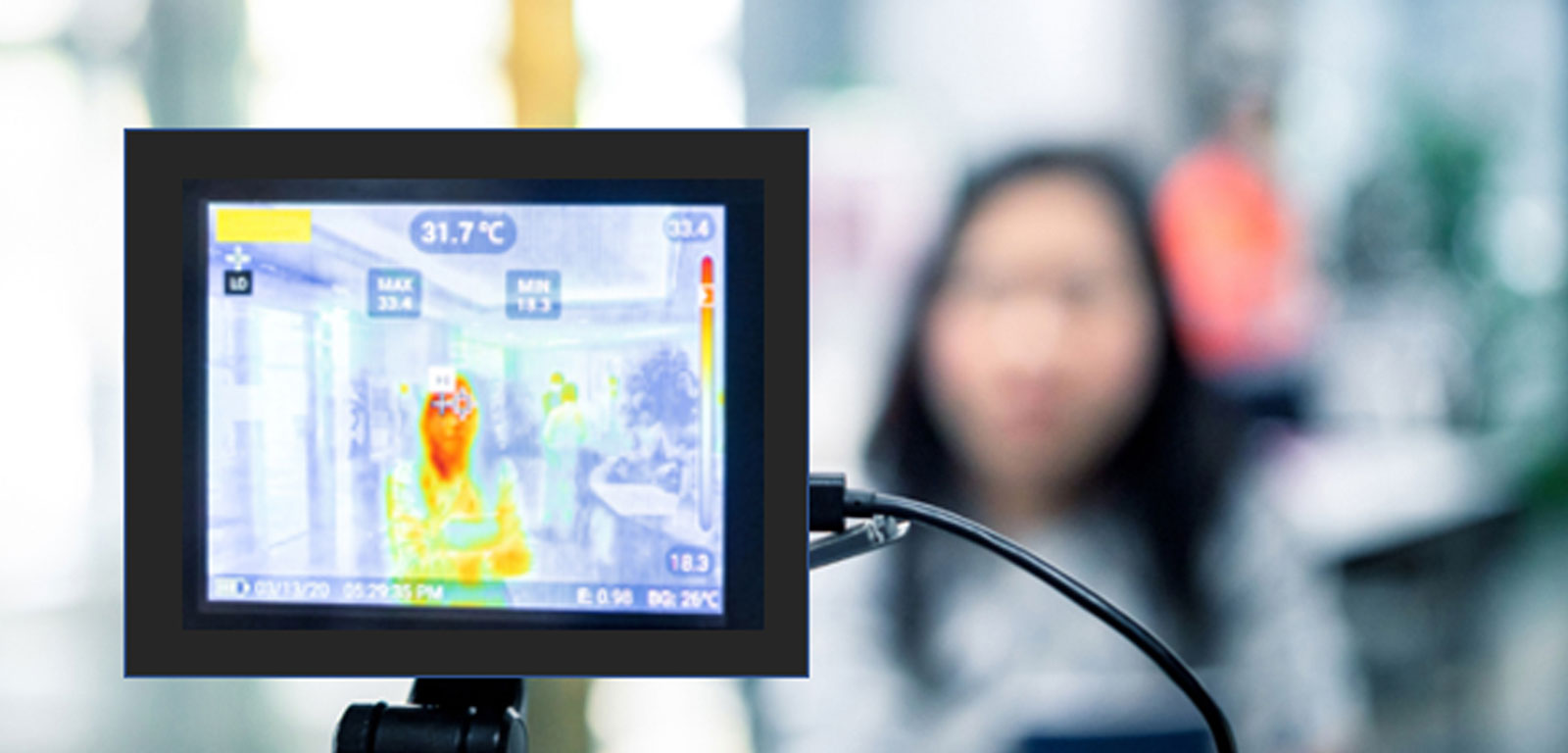
Sensing and sensor systems are essential for advances in research across all fields of physics, engineering and chemistry and can be enhanced when multiple sensing functions are combined into arrays to enable imaging.
Industrial applications of sensor systems are ubiquitous: from mass-produced sensors found in modern smartphones and cars to the state-of-the-art, specialist high-value sensors routinely used in oil and gas recovery, scientific equipment, machine tools, medical equipment and environmental monitoring.
More info: Click here
Semester 1
Semester 1 is delivered at the University of Glasgow.
Core courses:
Circuits and Systems
P431M Fundamentals of Sensing and Measurement
Technology and Innovation Management
Research Project Preparation
Optional courses:
Digital Signal Processing
Lasers and Electro-Optic Systems 4
Microelectronics in Consumer Products 4
Nanofabrication
Waves and Diffraction
Semester 2
Semester 2 is delivered at the University of Edinburgh.
Compulsory courses:
Applications of Sensor and Imaging Systems
Research Project Preparation
Optional courses:
Two to four (depending on course weighting).
Biophysical Chemistry Level 11
Physical Techniques in Action 11
BioSensors and Instrumentation
Lab-on-Chip Technologies
Microfabrication Techniques
Electronic Product Design and Manufacture
Technology and Innovation Management
Semester 3
Semester 3, the project component of this degree, is undertaken at either the University of Glasgow or the University of Edinburgh.

Sensor and imaging systems (SIS) underpin a vast range of societal, research and industrial needs. Sensing is essential for advances in capability across all fields of physics, engineering and chemistry and is enhanced when individual sensing units are configured in arrays to enable imaging and when multiple sensing functions are integrated into a single smart system.