


A UK 2:1 degree, or its international equivalent, in a numerate discipline such as mathematics, engineering, computer science, physical or biological sciences, economics or business.
Your degree must have included substantial mathematics content, including calculus (including calculus of several variables), linear algebra, probability, statistics and statistical theory. Detailed information is available from the School of Mathematics website.
You can increase your chances of a successful application by exceeding the minimum programme requirements.
For 2020 entry we accept the following English language qualifications at the grades specified*:
IELTS: total 6.5 (at least 6.0 in each module)
TOEFL-iBT (including Special Home Edition): total 92 (at least 20 in each module). We do not accept TOEFL MyBest Score to meet our English language requirements.
PTE Academic: total 61 (at least 56 in each of the "Communicative Skills" sections)
CAE and CPE: total 176 (at least 169 in each module)
Trinity ISE: ISE II with a distinction in all four components
For 2021 entry we will accept the following English language qualifications at the grades specified*:
IELTS: total 6.5 (at least 6.0 in each module)
TOEFL-iBT (including Special Home Edition): total 92 (at least 20 in each module). We do not accept TOEFL MyBest Score to meet our English language requirements.
CAE and CPE: total 176 (at least 169 in each module)
Trinity ISE: ISE II with a distinction in all four components
*(Revised 21 February 2020 to remove PTE Academic from 2021 entry requirements. Revised 21 April 2020 to include TOEFL-iBT Special Home Edition in 2020 and 2021 entry requirements.)
Your English language qualification must be no more than three and a half years old from the start date of the programme you are applying to study, unless you are using IELTS, TOEFL, PTE Academic or Trinity ISE, in which case it must be no more than two years old.
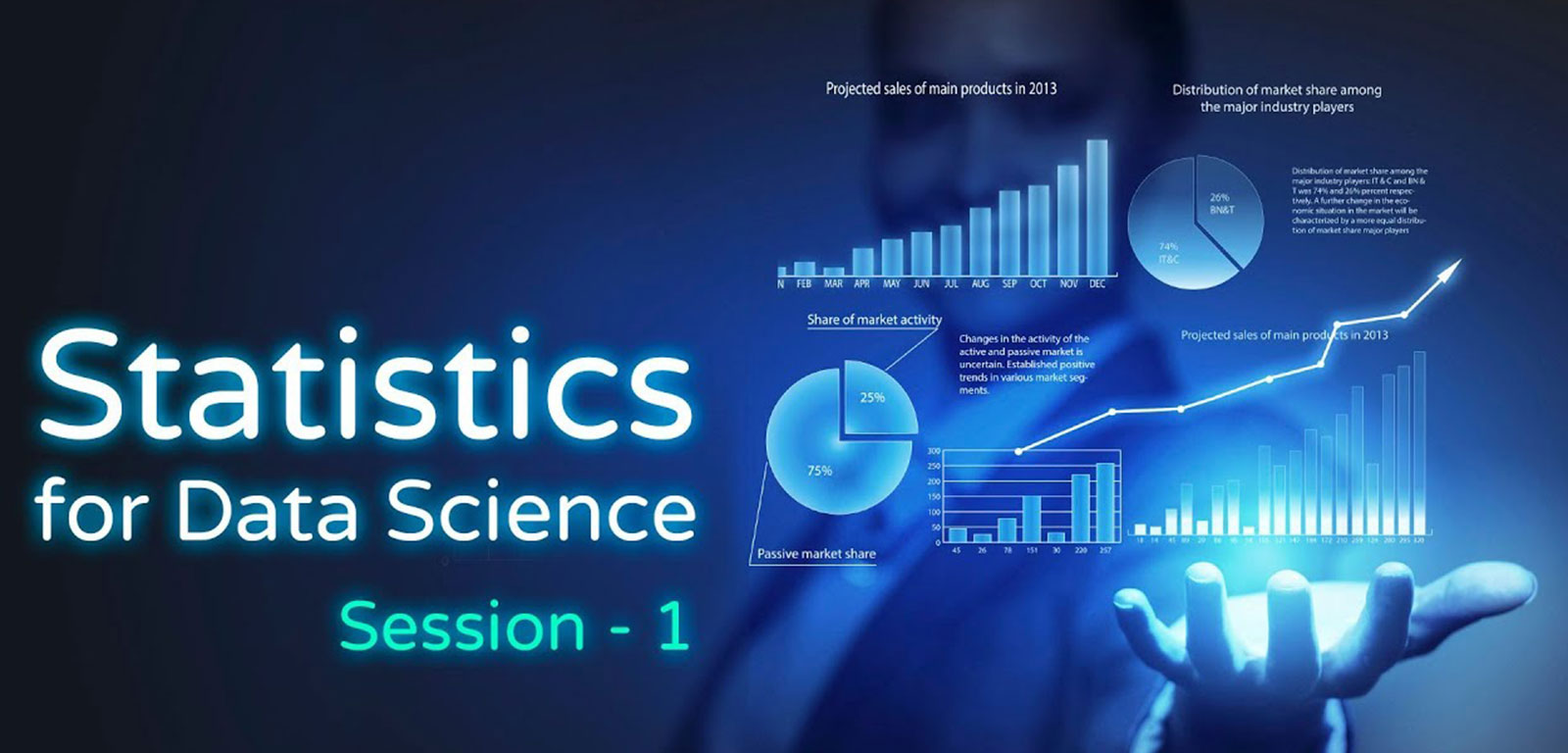
In this digital and data-rich era the demand for statistics graduates from industry, the public sector and academia is high, yet the pool of such graduates is small. The recent growth of data science has increased the awareness of the importance of statistics, with the analysis of data and interpretation of the results firmly embedded within this newly recognised field.
This programme is designed to train the next generation of statisticians with a focus on the newly recognised field of data science. The syllabus combines rigorous statistical theory with wider hands-on practical experience of applying statistical models to data. In particular the programme includes:
Graduates will be in high demand. It is anticipated that the majority of students will be employed as statisticians within private and public institutions providing statistical advice/consultancy.
Accreditation
This MSc is accredited by the Royal Statistical Society (RSS). Thus, this programme is recognised by RSS for the purpose of eligibility for the professional award of Graduate Statistician. The accreditation is based on the general depth, breadth, quality and foundation of the programme and its statistical content.
More info: Click here
Previous compulsory courses included:
Bayesian Data Analysis
Bayesian Theory
Generalised Regression Models
Incomplete Data Analysis
Statistical Programming
Statistical Research Skills
Previous optional courses included:
The Analysis of Survival Data
Biomedical Data Science
Credit Scoring
Fundamentals of Operational Research
Fundamentals of Optimization
Genetic Epidemiology
Large Scale Optimization for Data Science
Machine Learning and Pattern Recognition
Machine Learning in Python
Nonparametric Regression Models
Object-Oriented Programming with Applications
Probabilistic Modelling and Reasoning
Python Programming
Statistical Consultancy
Statistical Methodology
Stochastic Modelling
Time Series
Find out more about compulsory and optional courses
We link to the latest information available. Please note that this may be for a previous academic year and should be considered indicative.

Trained statisticians are in high demand both in public and private institutions. This programme will provide graduates with the necessary statistical skills, able to handle and analyse different forms of data, interpret the results and effectively communicate the conclusions obtained.
Graduates will have a deep knowledge of the underlying statistical principles coupled with practical experience of implementing the statistical techniques using standard software across a range of application areas, ensuring they are ideally placed for a range of different job opportunities.
The degree is also excellent preparation for further study in statistics or data science.